
What is AI art? A beginner-friendly guide to how it works and what it means for creativity


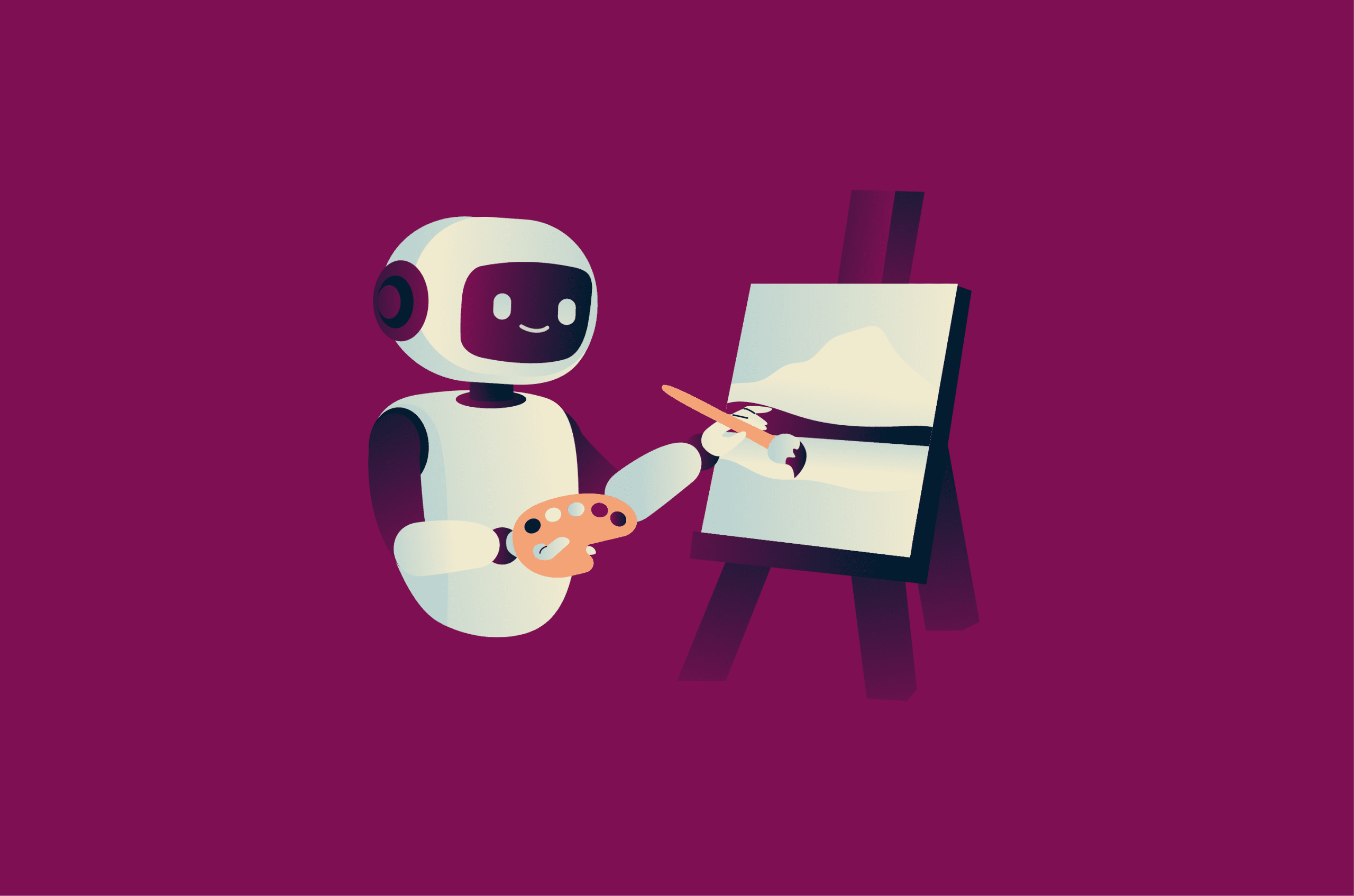
You can find AI art nearly everywhere, from art, design, entertainment, and marketing to personal projects. Christie's, the world-famous art and antique auction house, even has an AI art auction. In some cases, you may not even realize that what you’re looking at was created with AI.
Artists and creators use algorithms and generative AI programs that can take ideas and turn them into detailed, stylized images significantly faster than by hand. Instead of relying only on traditional artistic skills or software, creators can guide the process using prompts, references, and iterative changes.
In this guide, we’ll take a closer look at what AI art actually is, how it works behind the scenes, the tools people use to create it, and why it’s changing how we think about creativity.
What is AI art?
AI art refers to any artwork created or enhanced using AI tools. These tools rely on machine learning (ML) models that are trained on large datasets of images, styles, and visual patterns. This allows them to generate new images or designs based on what they’ve learned.
Most modern AI art falls under generative AI, meaning the system produces original outputs rather than simply editing existing images. This process is powered by algorithms that analyze data patterns and generate visuals that match a given input, such as a text prompt.
Many artists describe working with AI as a form of collaboration. The human provides the idea, direction, and refinement, while the AI handles much of the image generation. The final result depends on both the underlying model and the way the user guides it.
A brief history of AI art
AI art has roots in the late 1960s and early 1970s, alongside the broader rise of computer-generated art. One of the best-known early examples is AARON, a program by British artist Harold Cohen, who conceived the software in the late 1960s and developed it from the early 1970s until his death in 2016.
Unlike today’s AI image generators, AARON did not create images by analyzing large datasets of existing artworks or photos. Instead, it used rules and forms programmed by Cohen to generate original compositions. Over time, the system evolved from relatively simple abstract drawings into more complex figurative and color works, and Cohen used custom-built plotters, turtle robots, and painting machines to turn AARON’s outputs into physical drawings and paintings.
Around the same broader period, artists and researchers were also exploring algorithmic and generative graphics, using mathematical rules, code, randomness, and plotters to produce complex visual patterns. Fractal imagery emerged from Benoît Mandelbrot’s work with computer visualizations in the 1970s and became especially visible in the 1980s as computer graphics improved. These systems didn’t “learn” from large datasets in the way today’s AI image generators do; instead, they generated images from formulas, rules, parameters, and algorithms. Still, they helped show that computers could play an active role in creative output.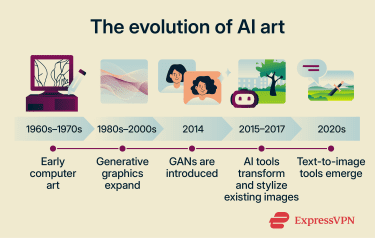
The next major shift came with advances in deep learning. In 2014, researchers introduced generative adversarial networks (GANs), which allowed AI systems to generate increasingly realistic images by training two neural networks against each other.
In 2015, projects like Google’s DeepDream and neural style transfer drew widespread attention for showing how neural networks could transform ordinary images into surreal or stylized visuals. Unlike modern text-to-image generators, these systems were primarily used to modify, amplify, or restyle existing images rather than create entirely new scenes from text prompts. Still, they marked an important step toward AI image systems that could use patterns learned from large visual datasets in creative ways.
Currently, AI art has entered a new phase with the rise of text-to-image technology. Models like DALL·E and Midjourney can generate detailed images from simple text prompts. This has made AI art far more accessible, allowing creators to produce complex visuals quickly and to experiment with styles, concepts, and ideas in ways previously out of reach.
How does AI art work?
AI art generation typically follows three main stages: training the model, generating the image, and refining the result. While the process can feel almost instant from a user’s perspective, each step relies on complex systems working behind the scenes.
1. Training the model
AI art models are trained on massive datasets containing millions of images, styles, objects, textures, and visual relationships. The goal is to help the model understand how different elements of an image fit together.
Rather than simply storing and retrieving images, these models generally learn statistical patterns in visual data. However, researchers have shown that some models can reproduce parts of their training data in certain cases, which is one reason AI art raises copyright and privacy concerns.
2. Generating the image
Once trained, the model can generate images based on user input. In most modern systems, this happens through text prompts. A user describes what they want to see, and the AI translates that description into a visual output.
3. Iteration and refinement
AI-generated art is rarely a one-step process. Creators generally need to refine the output by adjusting the prompts, creating multiple variations, building on what they liked, and manually editing specific parts of the image.
This iterative approach provides greater control over the final output. Small changes in wording, style references, or composition can lead to noticeable differences in results. In many cases, the creative process involves experimenting with multiple prompts and versions before arriving at the desired image.
AI models used in art generation
Different types of AI models power these systems, each with its own role in how images are created:
- GANs: As mentioned, these use two competing networks, one that generates images and another that evaluates them.
- Convolutional neural networks (CNNs): Commonly used for image classification and object recognition. This analysis helps models understand visual structure and features.
- Neural style transfer: Applies the style of one image, such as a painting, to another image while preserving the second image’s content.
- Transformers: Neural network architectures commonly used to interpret prompts and understand relationships between words.
- Creative adversarial networks (CANs): A variation of GANs designed to push creative boundaries toward new, creative styles while still staying within what people recognize as art.
Popular AI art tools
There are multiple platforms that allow anyone to create AI-generated art. Creators can create basic art with simple text-to-image generators or more advanced creative suites. Each tool offers a slightly different approach to style, control, and output.
- OpenAI image tools/DALL·E: OpenAI’s image-generation tools can create visuals from natural language prompts and support image-editing features such as inpainting.
- Midjourney: Known for its artistic, stylized outputs. Widely used for concept art and creative visuals, with a chat-based workflow that supports quick iteration.
- Stable Diffusion: An open-source model that allows for deeper customization. It can run locally, making it a popular choice for developers and advanced users.
- Runway ML: A broader creative platform with tools for image, video, and motion-based AI content, often used in design and production workflows.
Beyond features and output quality, creators are also starting to compare tools based on how they handle data, especially when working with private or commercial content.
Examples of AI art
AI art spans everything from early experimental portraits to highly polished, photorealistic images.
One of the most well-known early examples is Edmond de Belamy, created by the French collective Obvious. The portrait was generated using a GAN trained on thousands of historical paintings. In 2018, it sold at auction for $432,500 at Christie's, marking one of the first times an AI-generated artwork entered the traditional art market.
Another widely discussed piece is Théâtre D'opéra Spatial, created by Jason M. Allen using Midjourney. The image won first place in a digital art category at the 2022 Colorado State Fair, sparking debate about whether AI-generated works should compete with human-created art.
These examples show how AI art has moved from experimental projects into mainstream recognition, raising questions about authorship, creativity, and the role of technology in art.
Types of AI-generated art
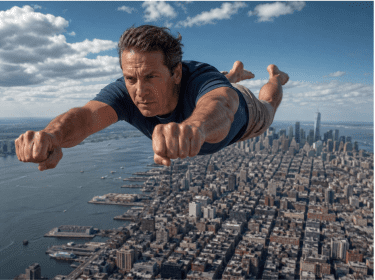
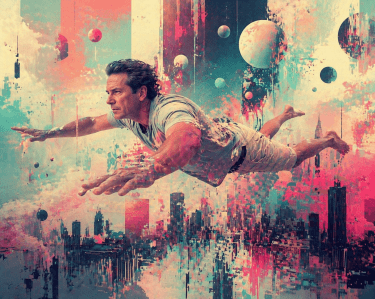
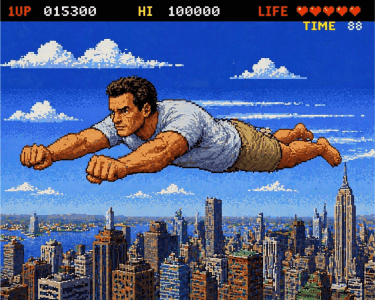
AI art isn’t limited to one look or genre. Depending on the prompt and model, it can produce a wide range of visual styles. The images below were all created with ChatGPT 5.5 using basic, one-sentence prompts.
- Photorealistic: Images that closely resemble real photographs, often used for portraits or product visuals.
- Abstract and experimental: Surreal compositions, unusual shapes, and color patterns that don’t follow traditional rules.
- Pixel and retro styles: Inspired by early video games or digital art aesthetics.
- Digital paintings and concept art: Highly detailed scenes used in games, films, and creative projects.
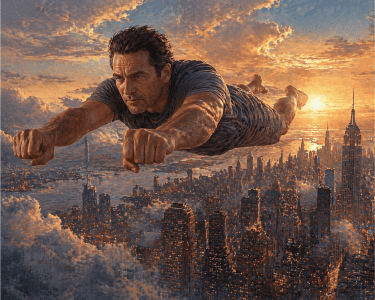
The same tool can generate all of these styles, depending on how it’s guided. This flexibility is one of the reasons AI art has become so widely used across industries.
How is AI art used in the real world?
AI art is increasingly common; you can find it on TikTok, in art galleries, and everywhere in between. Its main advantage is speed and flexibility, which lets creators visualize ideas quickly and refine them with minimal resources.
- Marketing and advertising: Teams use AI-generated art to rapidly visualize concepts, creating mockups, campaign visuals, and social media content without lengthy production timelines.
- Entertainment and game design: Artists and developers use AI to generate concept art, design characters, and build environments, helping speed up early-stage world-building.
- Fine art and galleries: AI-generated works are increasingly displayed in galleries and sold as digital assets or physical prints, including pieces tied to non-fungible tokens (NFTs).
- Education: Teachers and students use AI-generated visuals as learning aids, helping explain concepts or explore creative ideas in a more interactive way.
- Personal use: Individuals create custom avatars, unique gifts, and home décor, often using simple prompts to generate personalized designs.
AI art vs. traditional art
AI art and traditional art take different approaches to the creative process. While both can produce compelling results, they differ in how the work is created, how long it takes, and the skills required.
| AI art | Traditional art | |
| Creation process | Generated using algorithms trained on large datasets, guided by user prompts | Created directly by an artist using physical or digital tools |
| Creativity | Combines human direction with machine-generated outputs based on learned patterns | Driven primarily by the artist’s imagination, experience, and technique |
| Speed | Can produce multiple variations in seconds, enabling rapid experimentation | Often time-intensive, especially for detailed or large-scale work |
| Skill requirements | Lower technical barrier to entry, but requires skill in prompting and refining outputs | Requires developed technical skills like drawing, painting, or digital design |
Privacy considerations when using AI art tools
Creating AI art is more than just sharing an idea with a large language model (LLM). When you share your prompts, they can include personal concepts, creative projects, or even sensitive materials like client work or unreleased designs.
In many cases, these inputs don’t just disappear after you generate an image. This means your ideas, references, or creative direction could be retained or reused in ways you don’t fully control.
This becomes more important when working on:
- Client projects or commercial designs.
- Personal or identifiable images.
- Early-stage creative concepts you don’t want shared.
If privacy matters, it’s worth paying attention to how a tool handles your data, not just how good the images look.
Some platforms are starting to address this directly. For example, ExpressAI is designed so prompts, files, and conversations are processed in isolated environments and aren’t accessible to providers. That approach removes a common trade-off in AI tools, where better results often come at the cost of giving up control over your data.
Why is AI art controversial?
AI art raises questions that don’t yet have clear answers. Some of the debate is legal, some is ethical, and some comes down to how people define creativity and art in the first place.
Copyright and ownership
Ownership is still one of the most complex aspects of AI art. While copyright laws vary by jurisdiction, in some countries they are based on human authorship. Therefore, it’s unclear who, if anyone, owns an AI-generated image. Is it the person who wrote the prompt, the company that built the model, or no one at all? The answer often depends on how the image was created and where it’s being used, which makes things especially complicated for commercial use.
Ethical concerns
Much of the tension stems from how these systems are trained. AI models learn from massive datasets that can include copyrighted images, often without clear attribution or acknowledgment of the original creators.
Some artists have accused AI image tools of exploiting or imitating their work without permission. In several high-profile cases, artists found that their names or artworks had been used to train or prompt AI systems that produced images closely associated with their visual style. Critics often describe this as plagiarism or theft, although the legal questions around training data, style imitation, and copyright are still being tested in court.
Originality and creative authorship
Debate around AI art often comes down to how original the output really is. These systems generate images based on patterns learned from existing datasets, which leads some critics to view the results as derivative rather than truly new.
Others argue that this isn’t fundamentally different from how human artists work. People also draw on influences, references, and past experiences when creating something new. From this perspective, AI is simply another tool that reshapes how ideas are combined and expressed.
Is AI art really art?
The question of whether AI art qualifies as “real” art often comes down to how art itself is defined. The Merriam-Webster dictionary describes art as “the conscious use of skill and creative imagination, especially in the production of aesthetic objects.” Based on that definition, the debate centers on where creativity and intention come from in the process.
Some argue that AI art fits within this definition. The person creating the prompt provides the idea, direction, and creative intent, while the AI acts as a tool that helps bring that vision to life. From this perspective, AI doesn’t replace creativity; it changes how it’s expressed.
Others see it differently. Because AI systems generate images based on patterns learned from existing data, critics question whether the output reflects true imagination or simply recombines what already exists. They also point out that much of the technical execution is handled by the system, not the person.
In practice, there isn’t a single agreed-upon answer. For some, AI art expands the possibilities of art. For others, it raises uncomfortable questions about authorship, originality, consent, and compensation. In terms of aesthetic and cultural criticism, critics often describe it as “soulless” or “lifeless,” with low-effort AI-generated material often dismissed as “AI slop”: a term used for mass-produced, low-quality digital content made with AI.
FAQ: Common questions about AI art
Is AI art copyrighted?
How do I make AI art for free?
Will AI replace human artists?
Can AI art be sold?
How do AI art generators learn from data?
Take the first step to protect yourself online. Try ExpressVPN risk-free.
Get ExpressVPN